

INSPECTION TIPS
INSPECT SMART.
PROTECT EARLY.
Practical inspection tips and checklists to help you identify issues early and prevent costly damage to your building envelope.

Spot Issues Early
Prevent Costly Repairs
Inspection Advice & Tips
Signs of Blocked Gutters
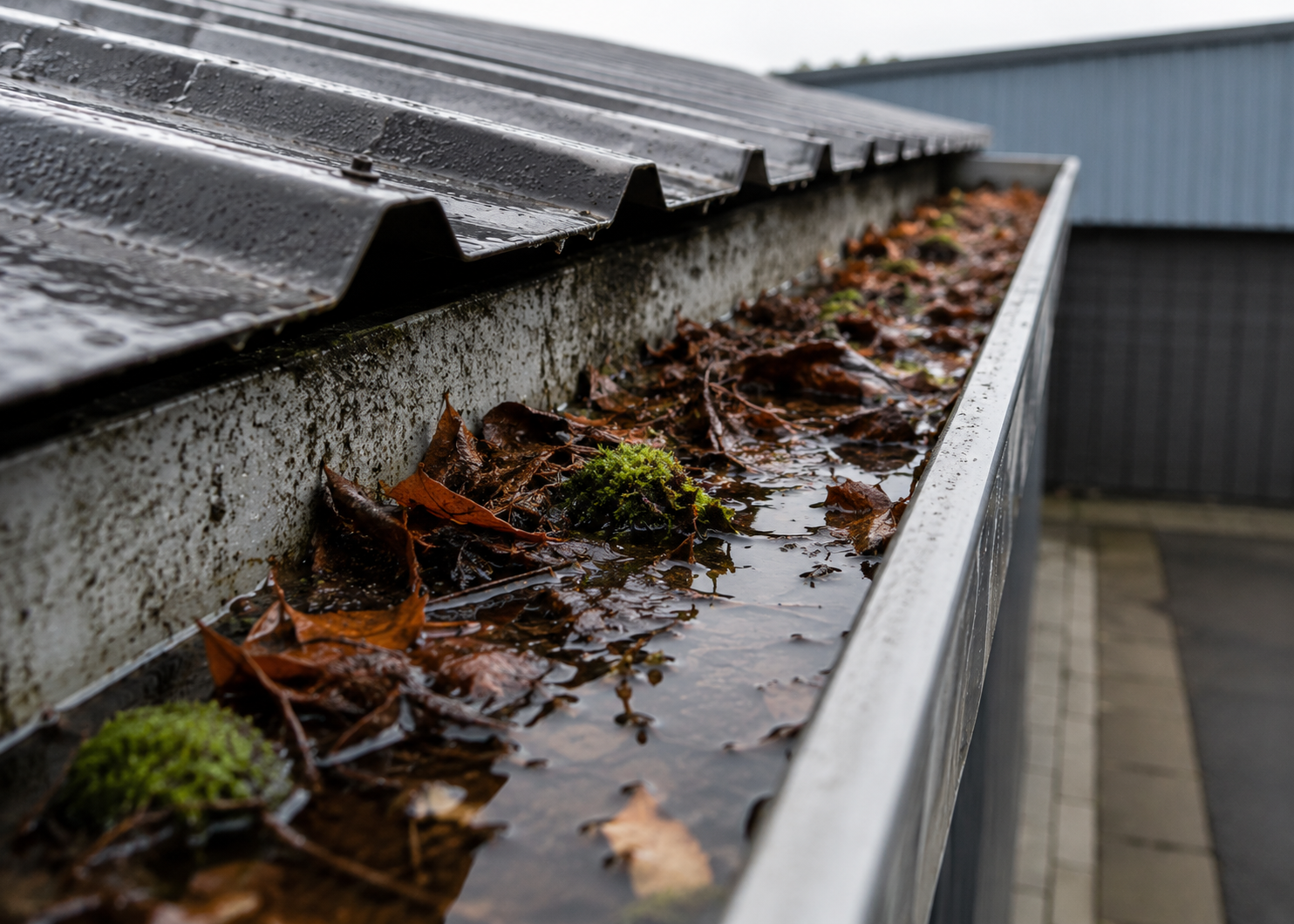
Leaves, moss, debris and standing water around gutter outlets are often early warning signs that a drainage system is no longer functioning correctly. Overflowing gutters can allow water to track into roof edges, cladding systems and internal wall areas, leading to damp, staining and long-term structural deterioration.
Routine visual inspections can help identify blocked outlets, sagging gutters, damaged joints and poor water flow before more serious problems develop. Paying attention to water marks, overflow staining and vegetation growth around gutters can help reduce disruption, extend roof lifespan and minimise costly repair works across commercial and industrial buildings.
Early Signs of Roof Leaks
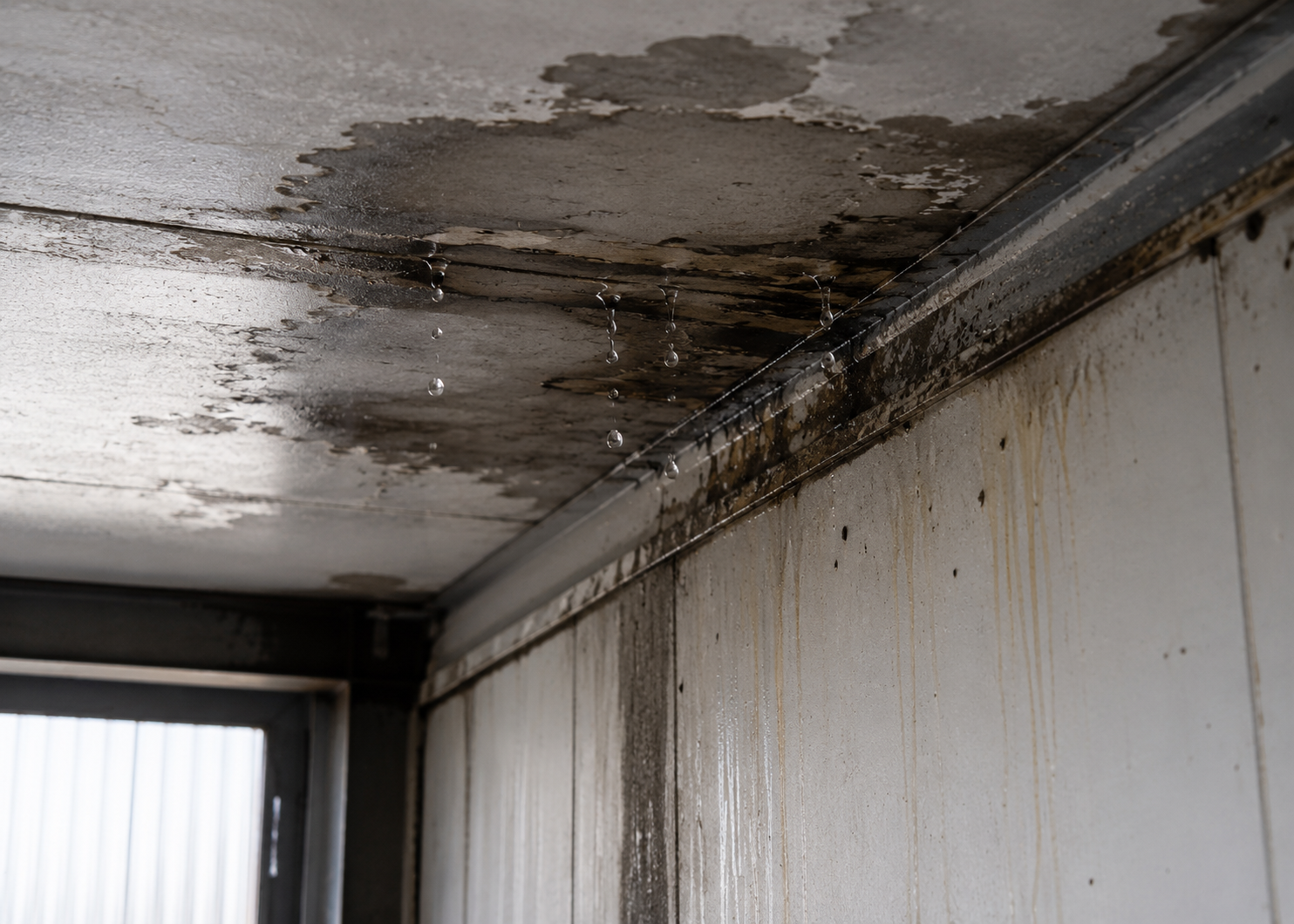
Internal staining, discolouration, damp patches and peeling finishes can often indicate developing roofing problems before major leaks become visible. Water ingress may be caused by damaged flashings, failed sealants, blocked drainage systems or deterioration within the roof build-up.
Regular inspections can help identify early warning signs before moisture causes wider internal damage, operational disruption or costly structural repairs. Areas around roof penetrations, joints and perimeter details should be checked routinely, particularly following periods of heavy rainfall or severe weather.
Inspecting Cladding & Flashings
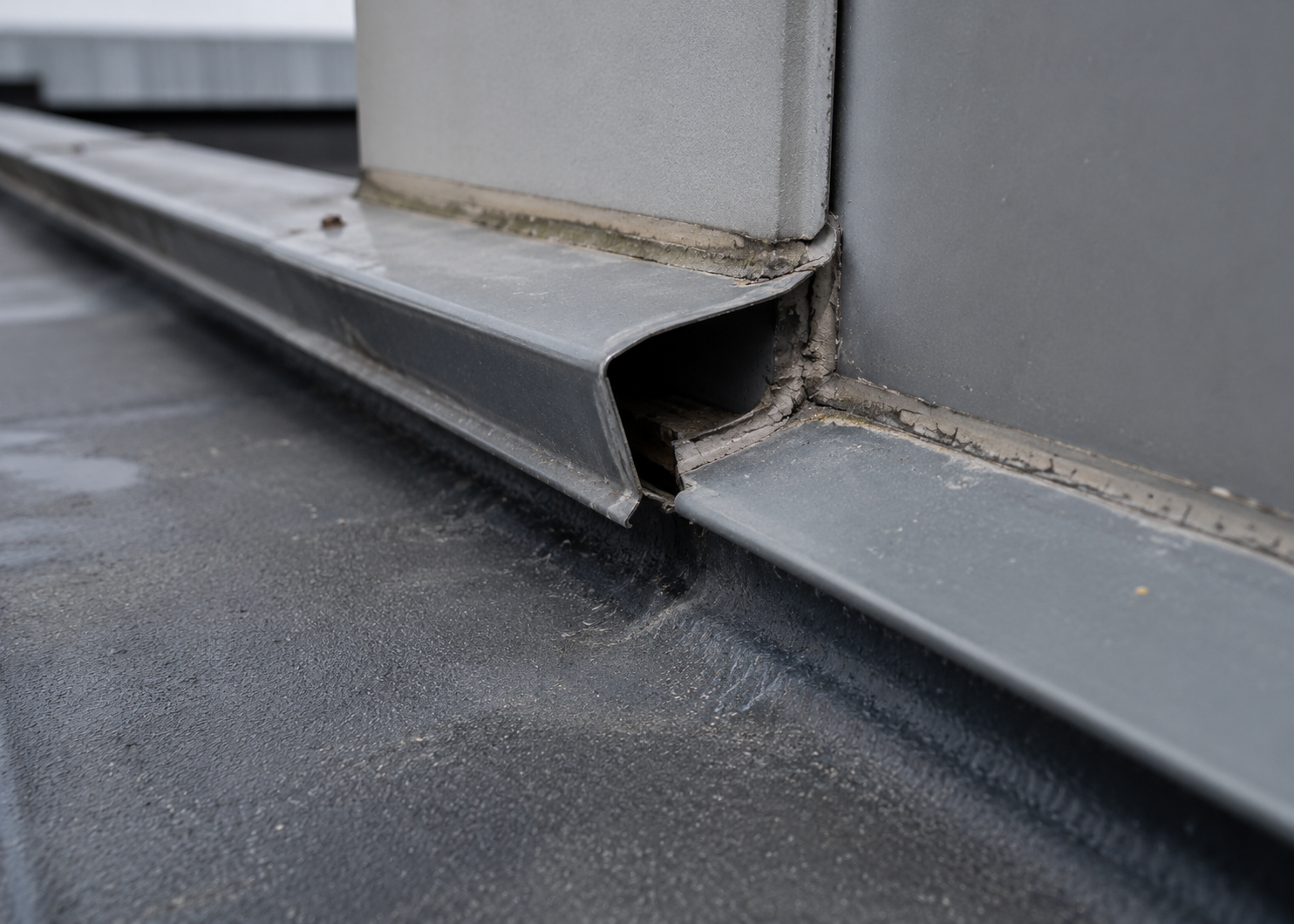
Routine inspections around cladding joints, flashings, penetrations and perimeter details can help identify early signs of movement, failed sealants and weather-related deterioration. Small gaps, loose fixings and damaged interfaces may allow moisture ingress behind external wall systems if left unaddressed.
Regular visual checks can help maintain weather protection, reduce long-term repair costs and identify areas requiring remedial attention before more significant failures develop
Standing Water
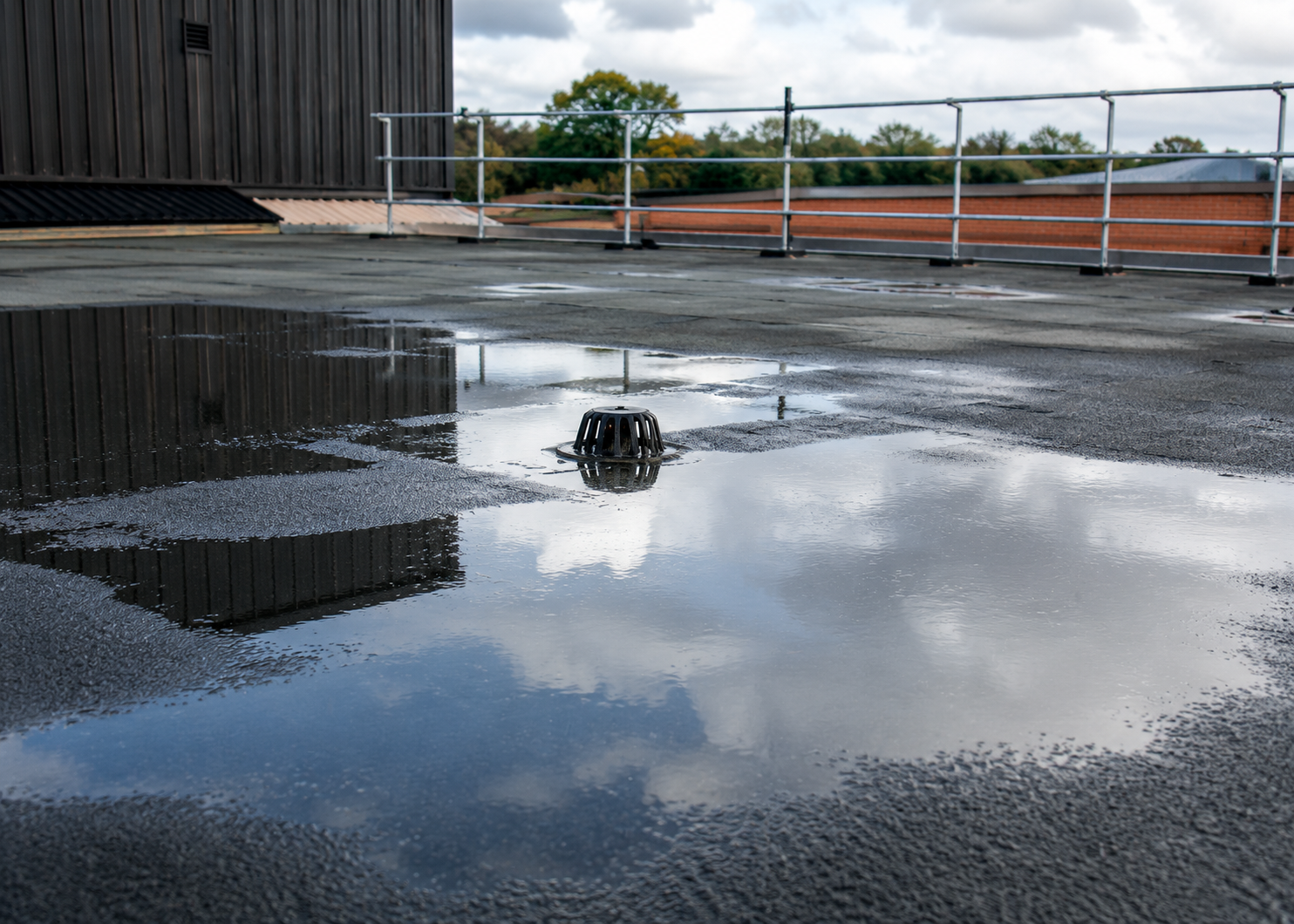
Standing water that remains on a roof surface more than 48 hours after rainfall can indicate drainage issues, blocked outlets or localised deflection within the roof structure. Over time, ponding water places additional stress on waterproofing systems, joints and seams, increasing the risk of premature deterioration and water ingress.
Routine inspections should check for areas where water consistently collects, particularly around outlets, penetrations and low points within the roof layout. Addressing drainage issues early can help extend the lifespan of the roof system and reduce the likelihood of costly repairs.
Corrosion
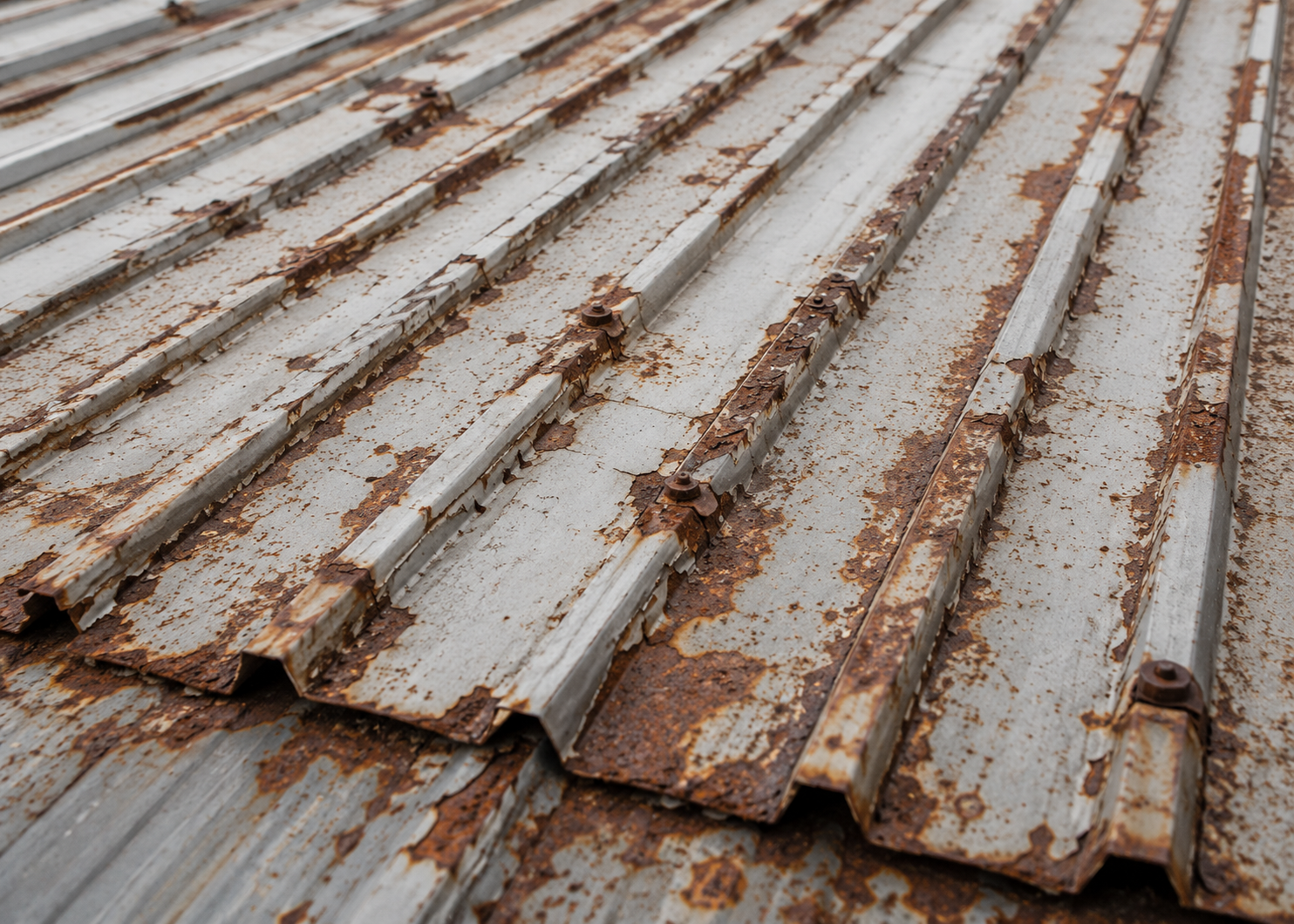
Corrosion, rust staining and coating breakdown on metal roof sheets, flashings or fixings are common signs of weather-related deterioration and ageing. If left untreated, corrosion can weaken roof components, damage protective finishes and create pathways for water ingress into the building envelope.
Inspection of exposed edges, overlaps, fasteners and roof penetrations can help identify early signs of deterioration before structural damage occurs. Regular maintenance and timely remedial works can significantly extend the service life of commercial roofing and cladding systems.